A vital part of running a politics blog is having political views. It’d probably be good to explain what mine are, so here they are.
Neoliberalism
The immediate thought that comes to mind with the mention of Neoliberalism is not a particularly good one in my mind: the mass unemployment under Margaret Thatcher, the rabid deregulation of markets, with a sprinkling of social conservatism. That’s not the kind of Neoliberalism I associate with.
One unfortunate thing with the term is that it doesn’t seem to have a proper meaning.
The kind of Neoliberalism that I, and many others, tend to follow is a far more modern and genuinely liberal ideology. There is a clear belief in individual liberty, and the idea that authority must be justified, questioned, and limited to prevent abuse of the individual. Like almost every form of liberalism, the market economy is still the most efficient economic system, with its ability to create wealth and the attachment to individual liberty with choice.
Where this new Neoliberalism (Neo-Neoliberalism sadly hasn’t caught on) differs from that of the 1980s is the market, social policy, and the welfare state. Leaving the market to be regulated by the ‘Invisible Hand’ is not always the best course of action. Doing so leaves it vulnerable to the emergence of abusive oligopolies and monopolies. There are few occasions where these are a good thing – their general existence makes the welfare of the average citizen worse. Some kind of guiding hand from the government is needed in order to best position the markets to function effectively in a way that is in the best interests of all parties.
On social policy, the old Neoliberalism doesn’t hold a great track record. Margaret Thatcher’s introduction of Section 28 is a prime example. Across the pond, the attitude of Reagan towards the AIDs epidemic and disagreements with the Civil Rights Act (Reagan, the South and Civil Rights, NPR) doesn’t help to paint it in a good light. New Neoliberalism does not follow suit; in any modern society, equality is an absolute must. Human rights must always be respected, no matter your race, gender, ethnicity, sex, language, religion, or whatever else defines you.
In terms of welfare, gutting it for the sake of it or for some deeper ideological meaning is not such a good way of going about things. Any welfare state should act like a safety net, and one that is very strong. When someone falls, the system shouldn’t trap them in it or abandon them completely: it should help them to get back on their feet by providing a basic floor that keeps them away from poverty. The idea of a Universal Basic Income (giving everyone £1,000 a month) is growing in popularity, especially with the current situation cutting off a lot of people from their work.
Now this may all just sound like liberalism at it’s most basic, and broadly speaking it does follow the core ideals. Where it breaks from tradition is based around the state. Neoliberalism is not the same in respect to traditional liberalism with emphasis on natural freedom. The idea that in a stateless society everyone would be free is not necessarily true; in a state of affairs with no state, there is nothing to protect people from the actions of others (rephrase?). The state can and should be used as a vessel to promote and enhance freedoms, protecting minorities and the vulnerable, and maintaining some kind of order.
For anyone looking to read more into Neoliberalism, there are some fantastic articles on it, from the Exponents Magazine (What is Neoliberalism?), Sam Bowman (I’m a neoliberal. Maybe you are too) and Arc Digital (Why would anyone want to be a Neoliberal?). A lot more information is up on the Neoliberal Project website.
Georgism
The landlord is a gentleman who does not earn his wealth – David Lloyd George
Georgism is the ideology of the Land Value Tax, to put it simply. Supported by three prime ministers (Asquith, Lloyd George, and Churchill) it’s a bit of a wonder as to how such an influential idea isn’t more well known.
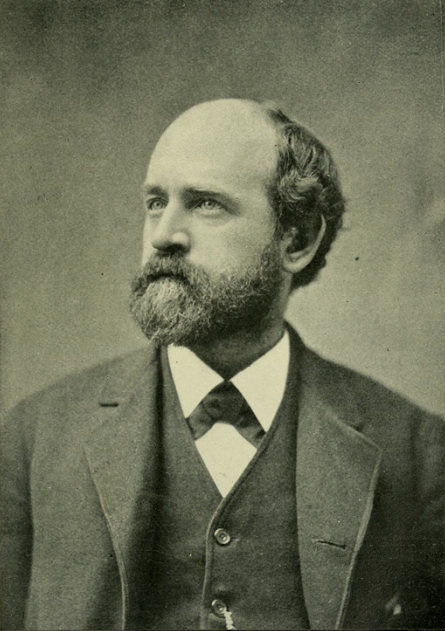
The idea of the land tax primarily came from American economist Henry George (hence the name). His idea for the tax came from his visits to the cities of San Francisco and New York. In San Francisco, George saw how land values could grow rapidly and out of control as the population grew. In New York, he saw the devastating effects of renting on the city, with much of the city being owned by rich landowners from outside the city who were extracting the wealth from the city via rents. This led George to write Progress and Poverty, which became the second most sold book of the 1890s with 3 million sold (the Bible, as always, outsold it).
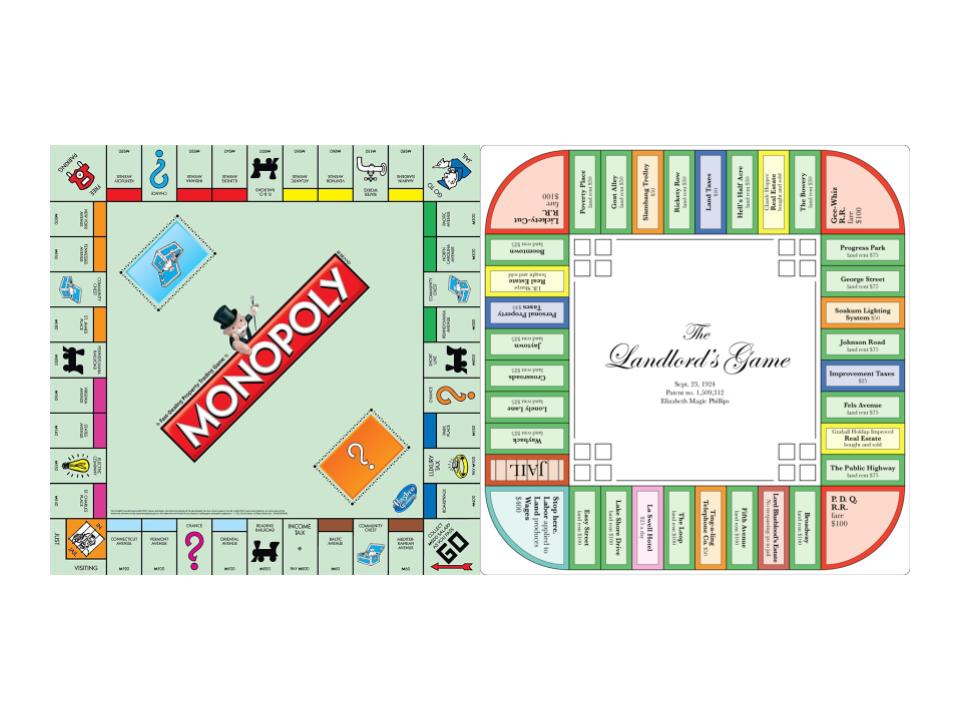
The early 1900s were a golden age for Georgism. In the 1908 ‘People’s Budget’ proposed by then chancellor David Lloyd George, the land tax was an instrumental part of funding for military projects and the new welfare state, with Asquith proposing “to free the land that from this very hour is shackled with the chains of feudalism.” Monopoly everyones favourite family-ruining board game, evolved from the 1904 The Landlord’s Game, designed to show players how Georgism worked. But past that, Georgism never truly emerged as a leading idea. Land taxes are in use across the world however, with Denmark, Estonia, Singapore all having some form of it. In the USA the state of Pennsylvania has implemented a land tax at a more local level within some cities.
There are generally two groups of arguments for a land value tax/Georgism; the moral argument and the practical arguments. The moral argument generally stems from the idea of natural rights. Land is naturally occuring, necessary for life and not invented by a person. Like air, everyone needs land to live. So why do we allow some people to wall off a bit of land who then charge you to use it, when we don’t do the same to air? Land should be considered a public good; you cannot exclude people from using it, and someone else using it doesn’t stop others from using it. If you want to claim a piece of land and have your ownership be respected, you should pay a tax on the value of the land you own in order for that to happen.
The economic argument for LVT boils down to it being a very effective tax. There are four criteria which make it an effective tax (you can really see the A-level econ shining through right here) namely, it should be: 1) easy to collect, 2) easy to pay, 3) hard to avoid, and 4) should not create disincentives. A land tax fulfils pretty much all these criteria. It is generally easy to collect and could be a similar process to council tax but easier to find the taxable amount as there is less to take into account when valuing the site. In an age of direct debit, as with council tax, it is easy to arrange payment. Number 3 is probably one of LVT’s biggest advantages – it’s incredibly difficult to avoid paying tax on a physical piece of land. It’s not something you can move to a tax haven, and so long as your name is on the land registry as owning that plot, you’re going to have to pay. And number 4 is a no-brainer – LVT does the opposite of disincentivizing. An undeveloped piece of land suddenly becomes a bit of a burden if you have to start paying tax on it. I see this as probably the best advantage of LVT, because it could stop developers from holding on to brownfield sites, waiting for the value to rise.
And amongst economists, a Land tax isn’t an unpopular idea. Many of the world’s most famous economists like Adam Smith, David Ricardo, and Milton Friedman suggested that a land value tax be used. Friedman, a man not known for his love of tax, called it ‘the least bad tax.’ That’s got to give it some credit as a concept.
Traditionally, Georgism was concerned with a land tax as a ‘single tax ‘; the abolition of all other taxes other than a land tax. Whether this is genuinely achievable is up for debate, but personally I don’t think it would. A land tax would be a good replacement for something like council tax with the potential to raise a lot of revenue. What this does depend on rather heavily is regular land valuations and a complete land registry of all UK land. Unfortunately, this isn’t something the UK does well so that hinders things. Although it does seem to be becoming a bigger idea in the UK with the Lib Dems and Greens proposing it in some form in their manifestos for the 2019 election.
For Georgism, Henry George’s Progress and Poverty is an absolute must read. As in, for a good explanation of more economic properties of LVT, this is a good post from a Georgist who I follow.
So that’s my politics. Hopefully I’ve explained everything well enough, but if you have any questions on anything feel free to message me on whatever platform you have me on.
 Luke's Politics Blog